YouTube / iTunes / Spotify / Radio Public / Pocket Casts / Breaker / Overcast
Listen to ArtisanEnglish.jp posts & lesson intros here.
Word of the Day: Escapism
What Is Escapism?
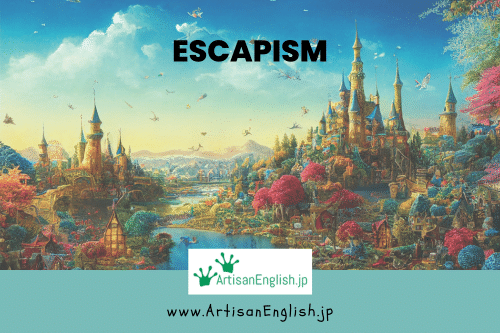
Escapism is the act of seeking distraction and relief from unpleasant realities, especially through entertainment or fantasy.
The word escapism comes from the idea of escaping from the real world, at least for a short time.
People use escapism as a way to take a break from their problems, worries, or stress.
It is not supposed to be about running away from life forever, but about finding a safe space to relax and recharge.
Popular Ways of Escapism
There are many ways people practice escapism in their daily lives.
Reading books is one of the most common forms of escapism, as it allows you to dive into different worlds and forget your own troubles for a while.
Hiking alone in nature is another form of escapism that helps many people clear their minds and find peace away from the noise of everyday life.
If you’re in Japan, be sure to carry bear spray and keep your wits about you.
Playing video games is also a popular form of escapism, offering an interactive way to explore new stories and challenges that differ from real-life problems.
Why Do People Need Escapism?
People often turn to escapism because life is stressful and overwhelming, and sometimes you just need to get away from it all.
Sometimes, work, school, or personal problems overwhelm us.
Escapism gives us a break from these feelings and helps us return relaxed and rejuvenated.
While too much escapism can keep us from facing important issues, a healthy amount can be good for mental health.
Escapism in Everyday Life
Escapism is a normal part of being human. Whether you find comfort in a good book, a walk in the woods, or a favourite video game, escapism can help you cope with life’s pressures. Embracing healthy escapism can make daily challenges easier to manage.
Flesch-Kincaid Readability Test
This post is understandable by someone with at least an 8th-grade education (age 13).
On the Flesch-Kincaid reading-ease test, this post scores 65.
The easier a passage is to read, the higher the score on a scale of 0 – 100.